What happens if the market goes nowhere for 10 years?
Justin and Jared discuss how retirees can prepare for a lost decade, why sequence of returns risk matters, and how diversification and spending
flexibility can help protect a retirement plan.
Takeaways:
The concept of a 'lost decade' refers to prolonged periods of poor investment returns that can severely impact retirement planning.
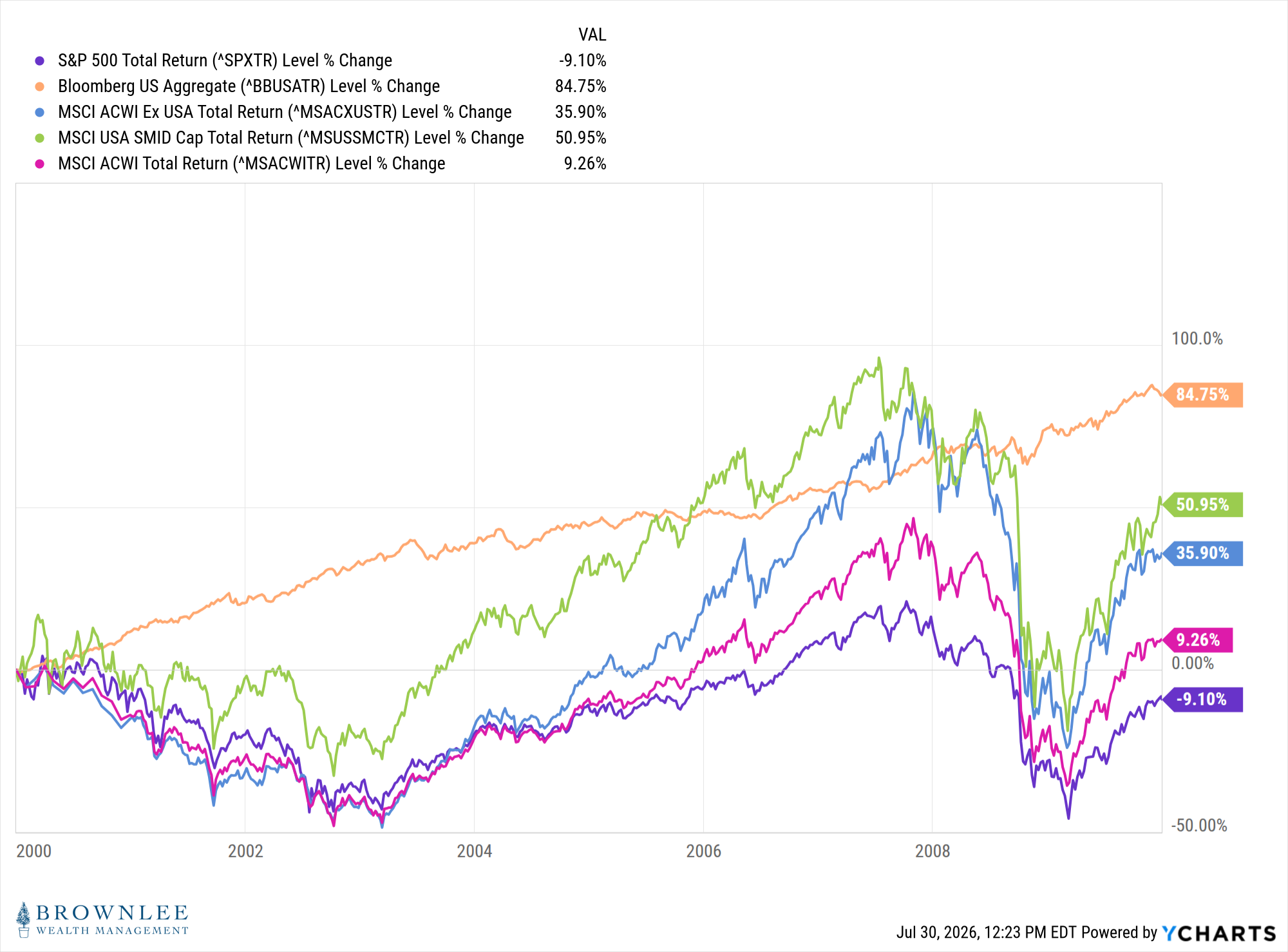
Historically, the S&P 500 experienced a total return of negative 9% from 2000 to 2009, marking a significant lost decade for investors.
Sequence of returns risk is crucial for retirees, as the order of investment returns can greatly affect portfolio longevity and sustainability.
Diversifying investments across various asset classes can mitigate risks associated with a lost decade, providing stability in downturns.
Spending adjustments during retirement, such as reducing withdrawals during poor market performance, can significantly enhance the longevity of a portfolio.
Investors must remain vigilant and flexible, as the unpredictable nature of markets necessitates a proactive approach to managing portfolios.
Chapters:
00:09 - Understanding Lost Decades in Financial Planning
01:26 - Introduction to the Lost Decade
11:30 - Understanding the Lost Decade: Asset Class Performances
20:05 - The Impact of Market Variance on Investment Strategies
25:22 - The Importance of Spending Adjustments in Portfolio Management
27:21 - Navigating Retirement Spending Strategies
Resources:
Returns by asset class
Returns of globally weighted portfolio with fixed income
Disclosure: This information is for informational purposes only. Nothing discussed during this video should be interpreted as tax, legal, or investment advice. If you have questions pertaining to your specific situation, please consult the appropriate qualified professional.
Brownlee Wealth Management is a fee-only financial planning firm in The Woodlands, TX that provides exceptional advice for a select number of families coming from oil & gas companies.
.png)
 Click to Talk with the Team